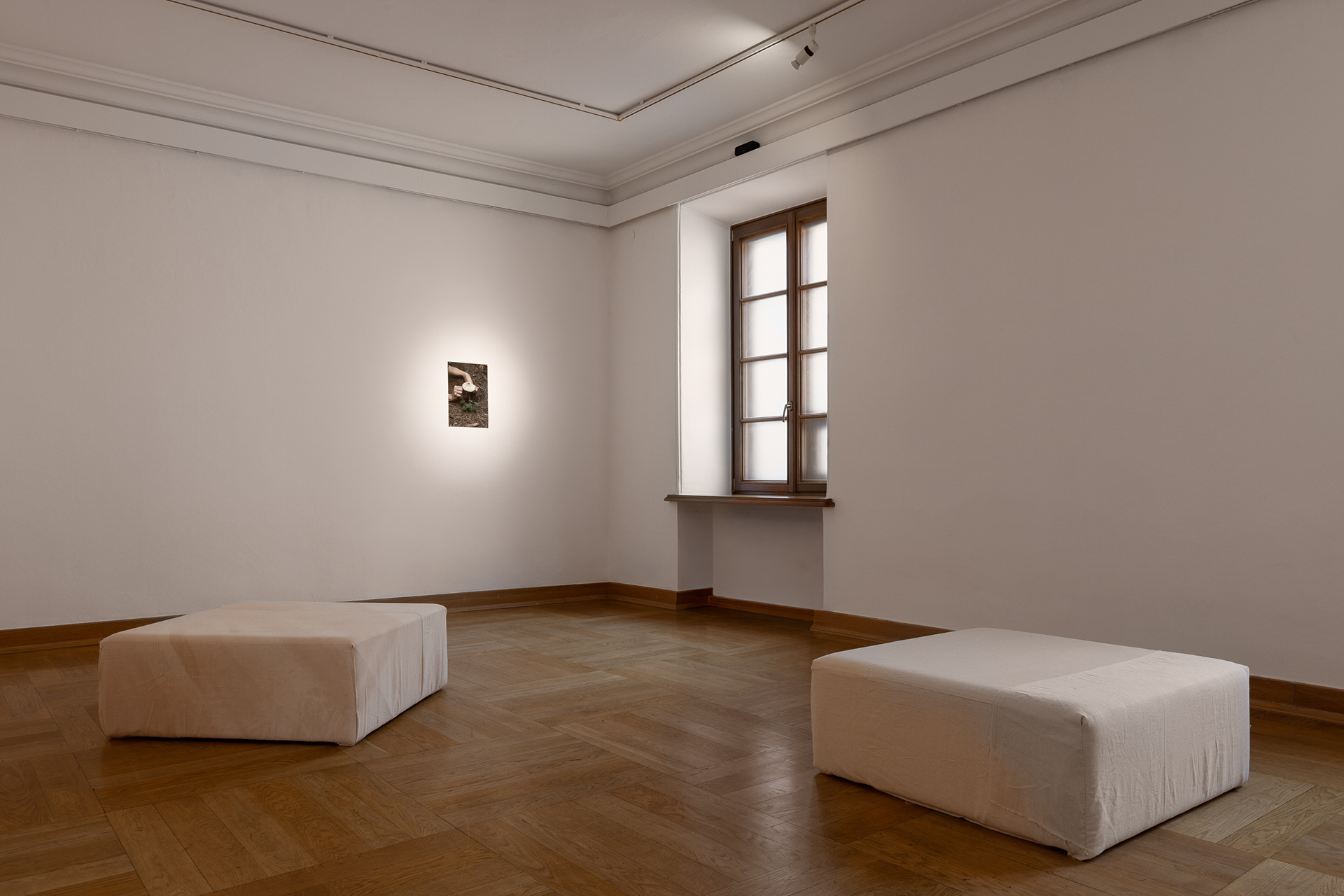
Topografia miękkiego gruntu | Topography of Soft Ground (2026)
April 10 – May 30, 2026
Galeria Promocyjna, Warsaw, Poland
Curator: Joanna Glinkowska
Coordination: Zuzanna Andruszko, Kinga Cieplińska
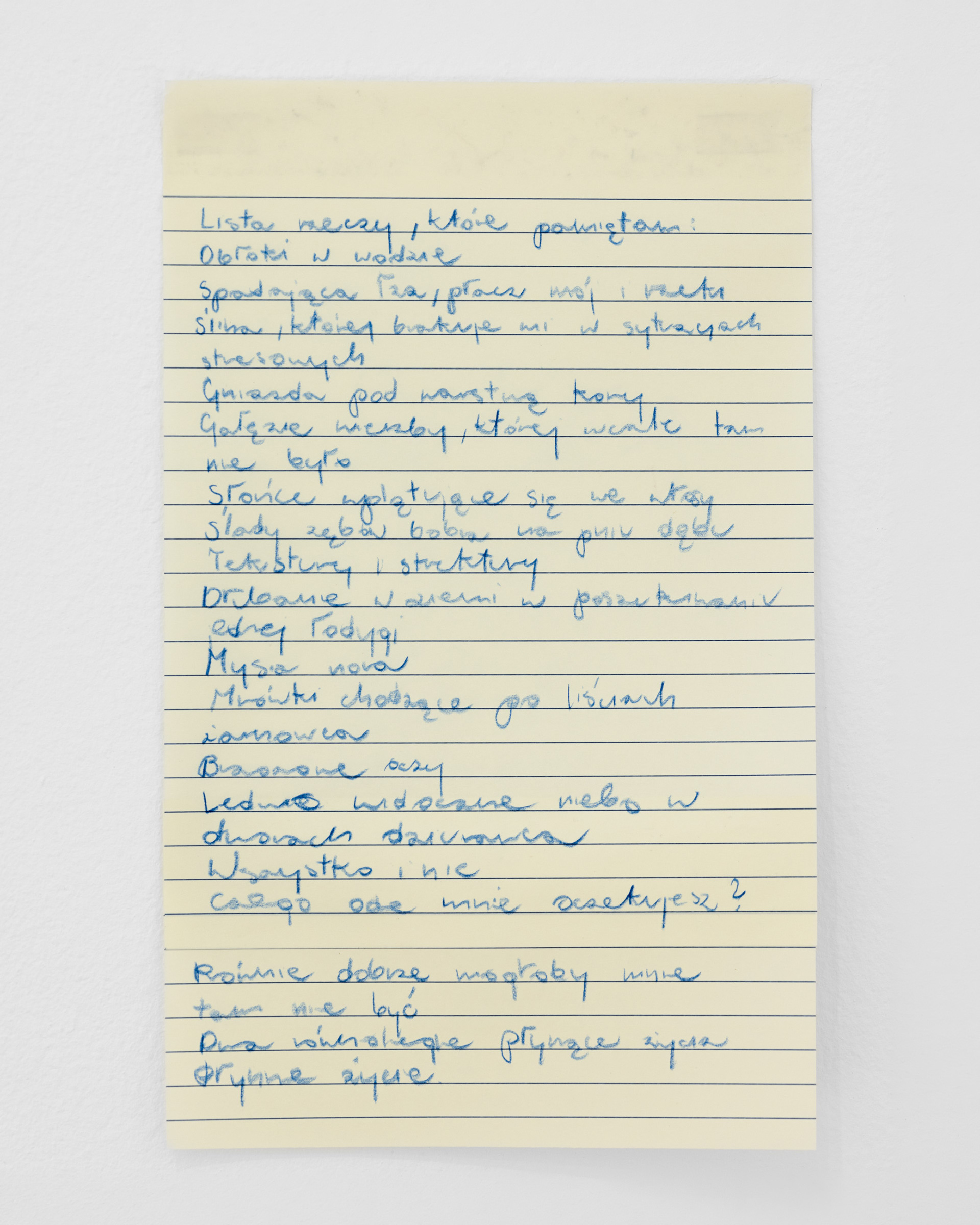
In the depths of winter, as the new year begins, my mind is desperately trying to recall memories of summer. It is almost as full of holes as all the socks I can’t bring myself to throw away because I am sentimentally attached to them. I remember the field horsetails glistening in the sun, the dirt under my fingernails, a tick crawling on the inside of my thigh, and the foxholes. I’ve been by the river so many times that I can no longer tell one memory from another. And I don’t even want to.*
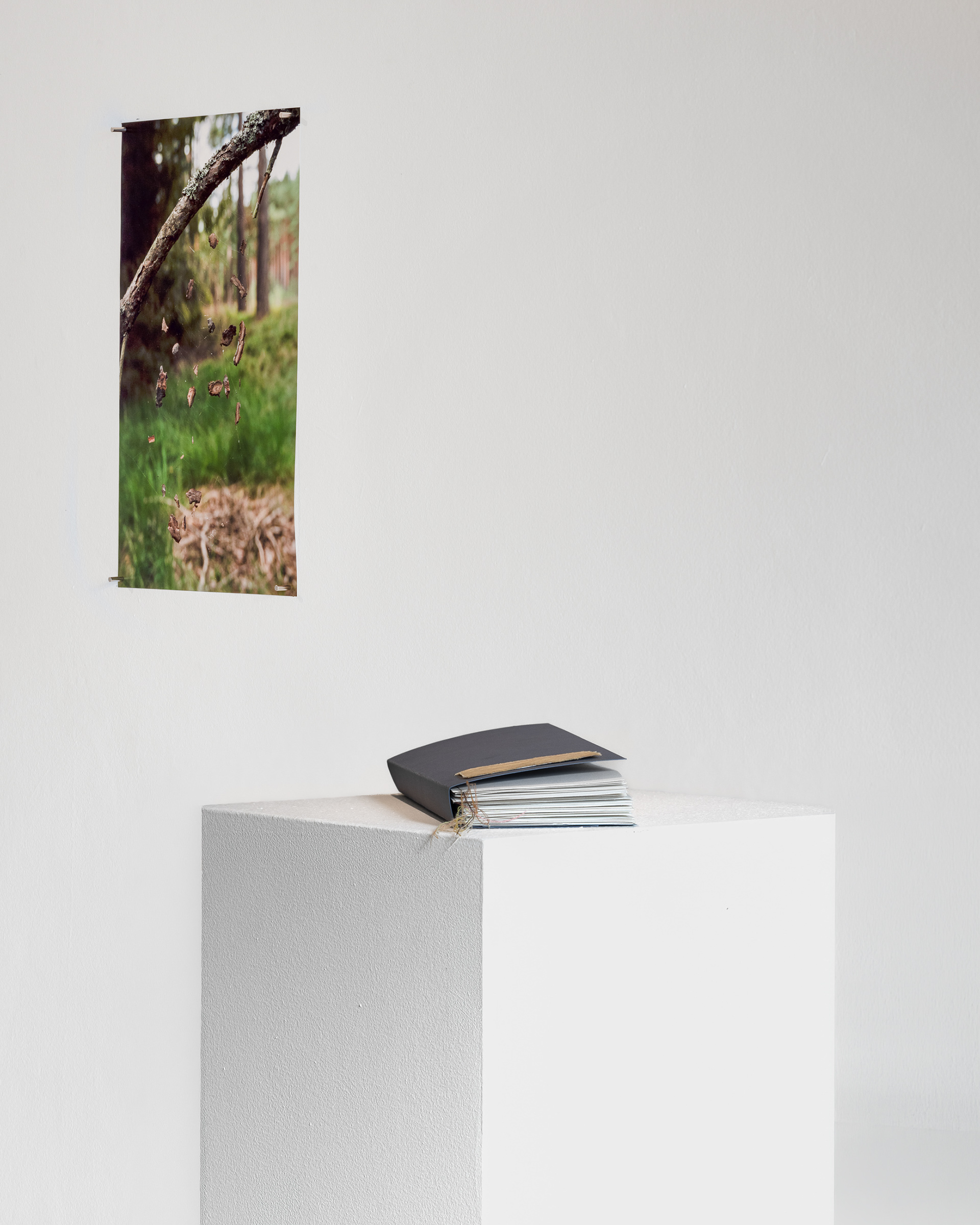
Documenting and archiving are practices associated with recording facts. Images are meant to attest the past situation, notes are designed to mediate the accounts, and artefacts to vouch that our memory does not deceive us. There are, however, archives that preserve not testimonies, but feelings. Gabriela Piwar does not keep a record of a place, but of her own memories of it. Photographs, sketches, clay works and hand-dyed fabrics are her personal methods of interpreting and recording a reality in which memories and imagination are inseparable.
The River Parsęta [pronounce: parsenta] that flows through the village of Krosino in north-western Poland is the protagonist of the exhibition. Piwar spent every summer as a child here and today she runs the artistic and research Projekt Parsęta with her mother. The ecosystem extends to forests, wetland, fallen branches, beaver lodges, and plants that overgrow the banks in summer and make the place almost inaccessible to people. The artist roams this space, alone or in the company of others, and the walks are a form of learning and discovery.
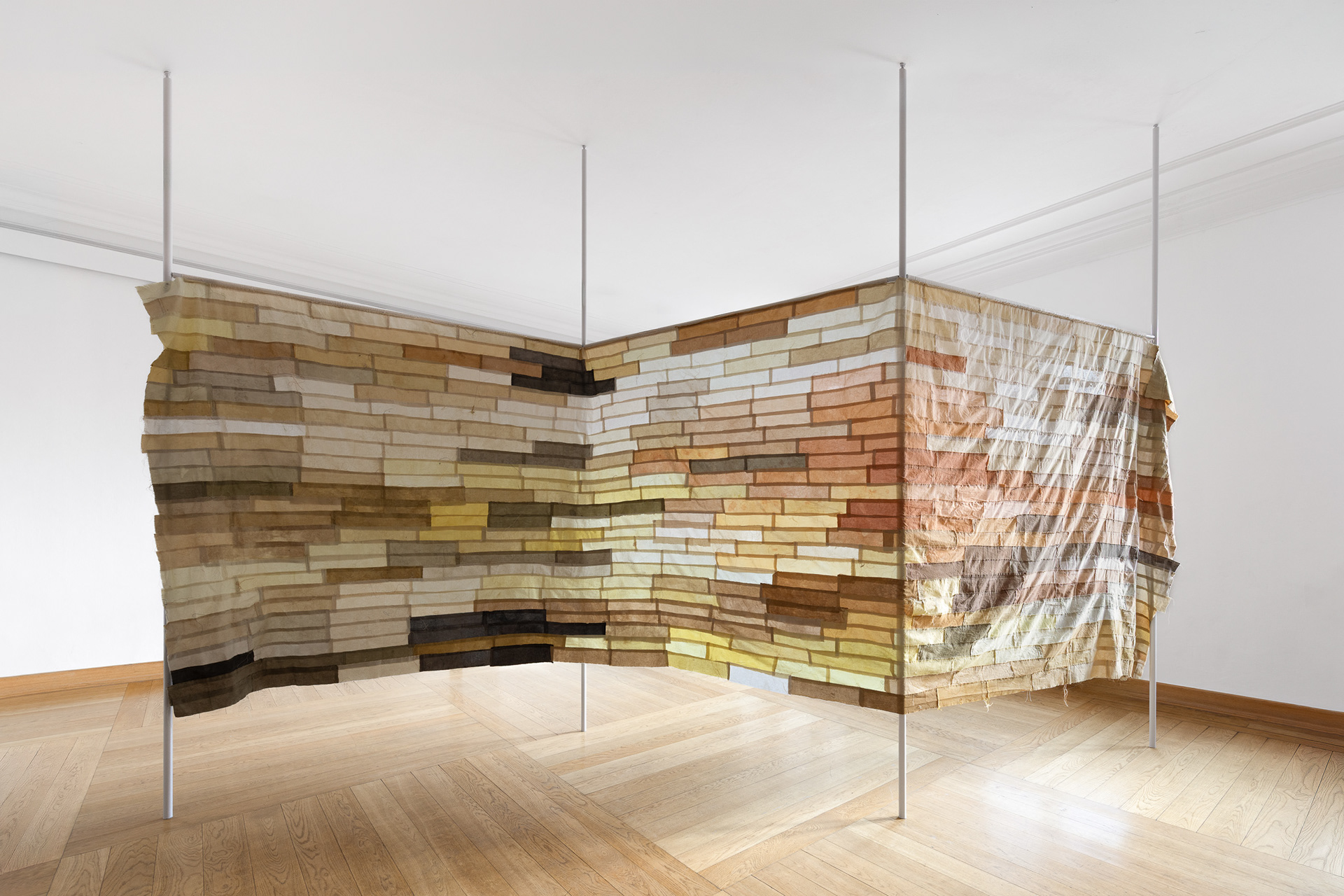
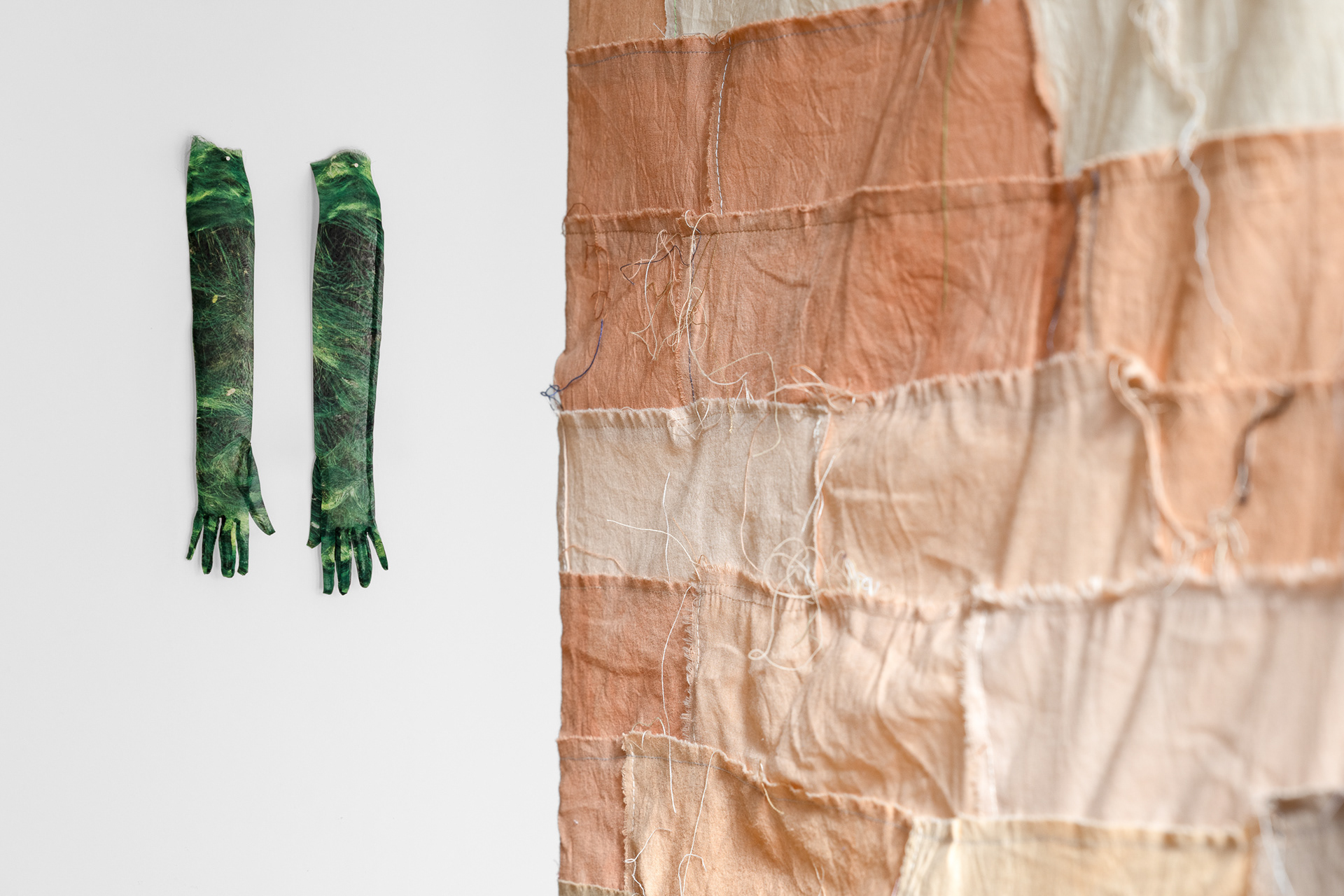
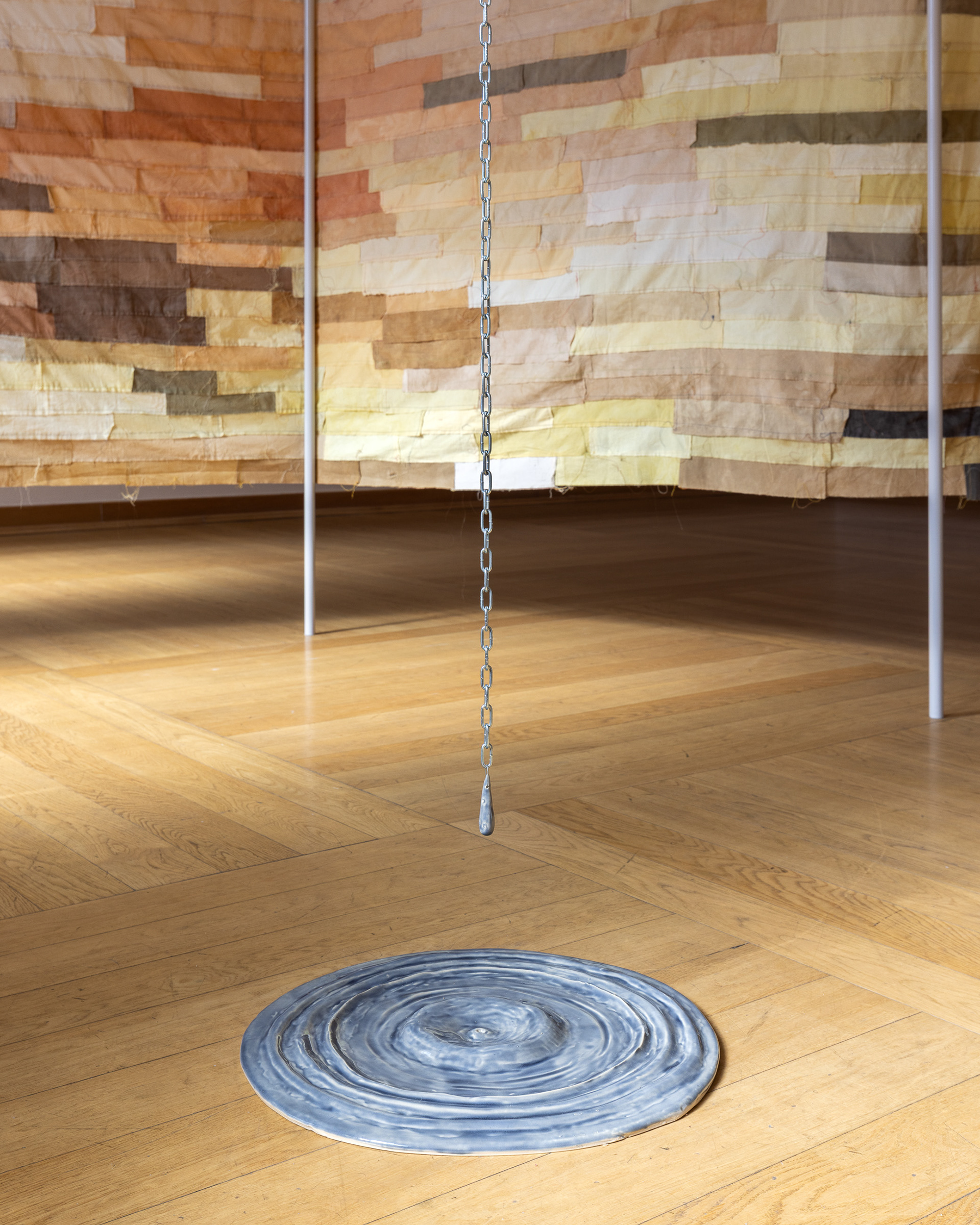
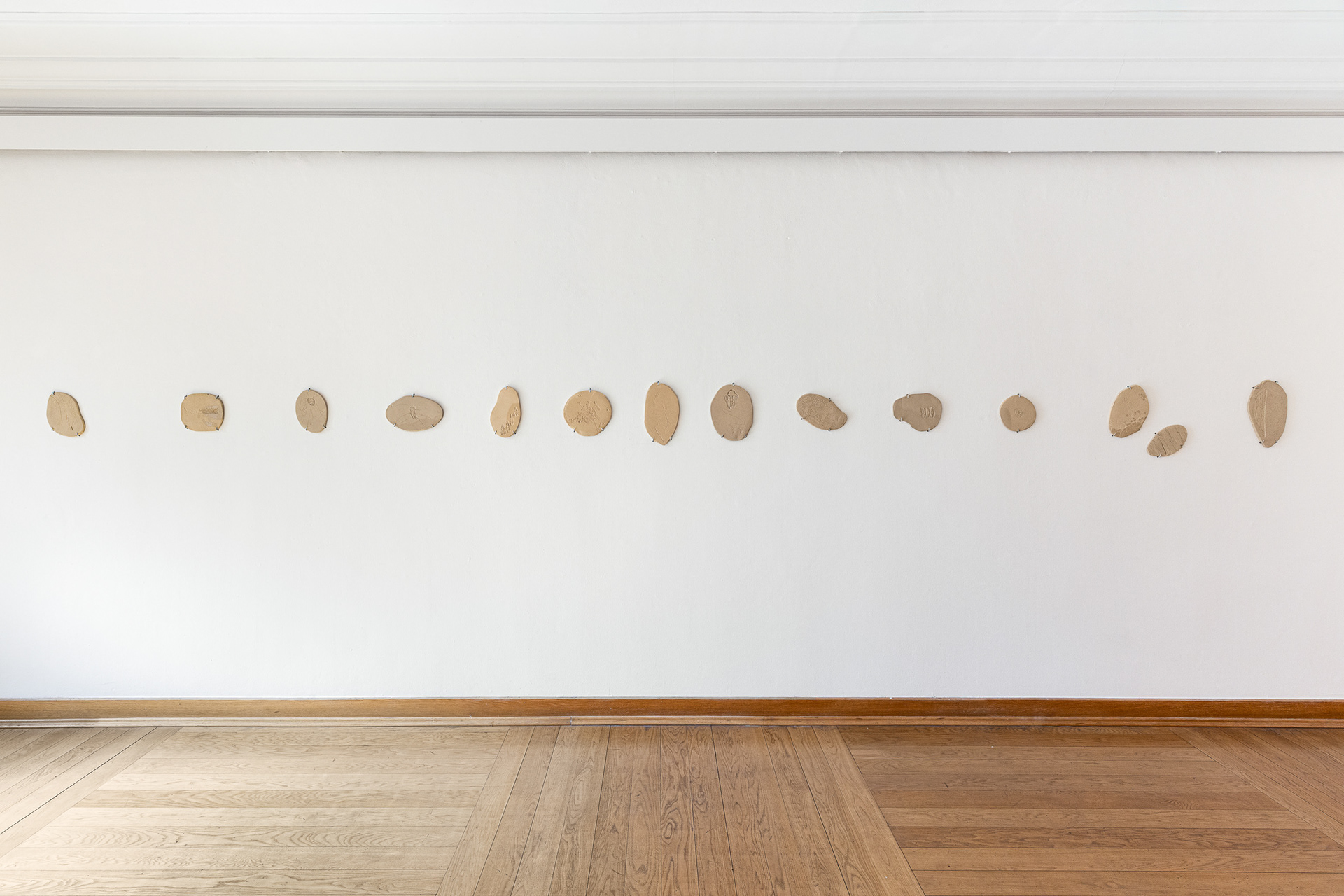
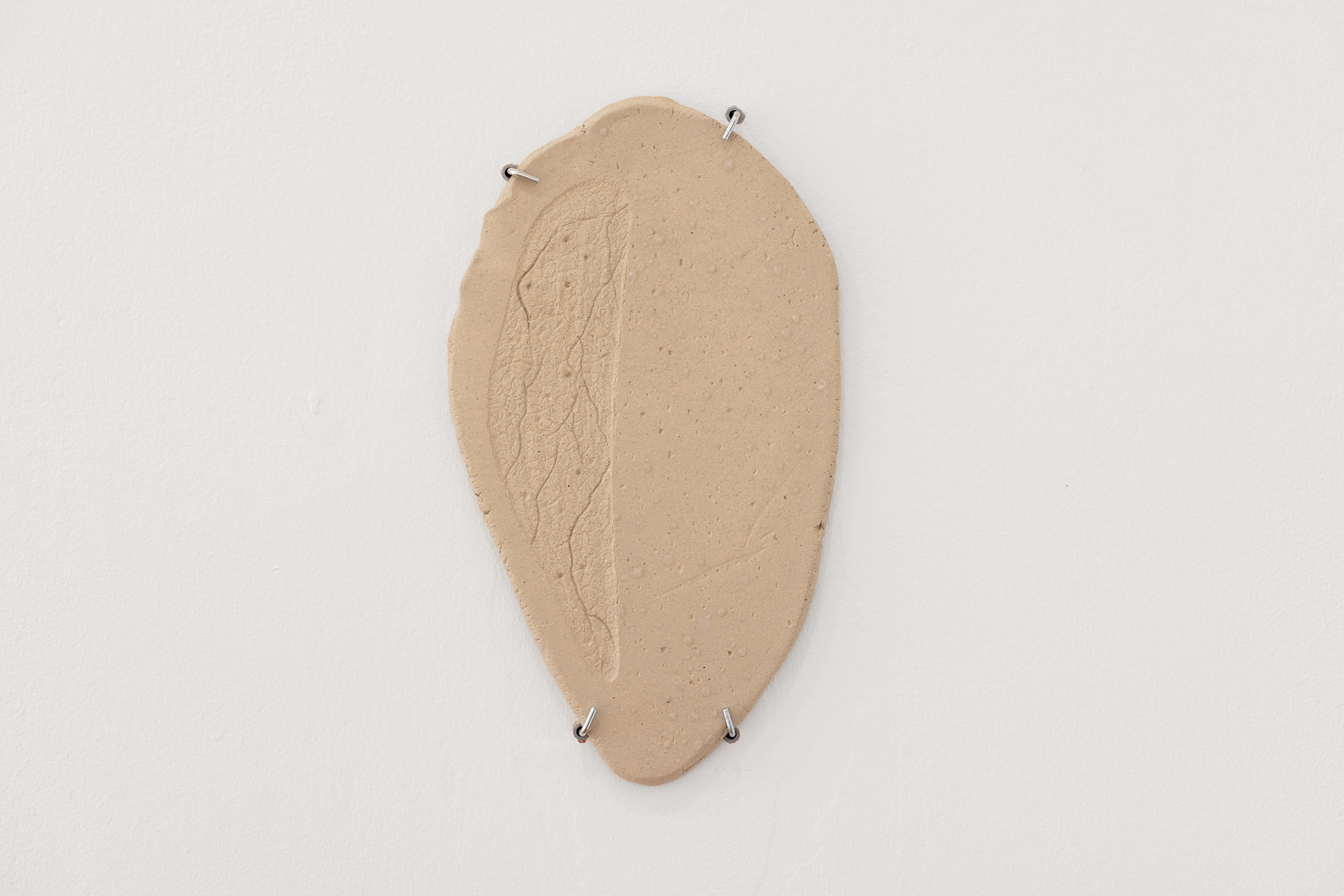
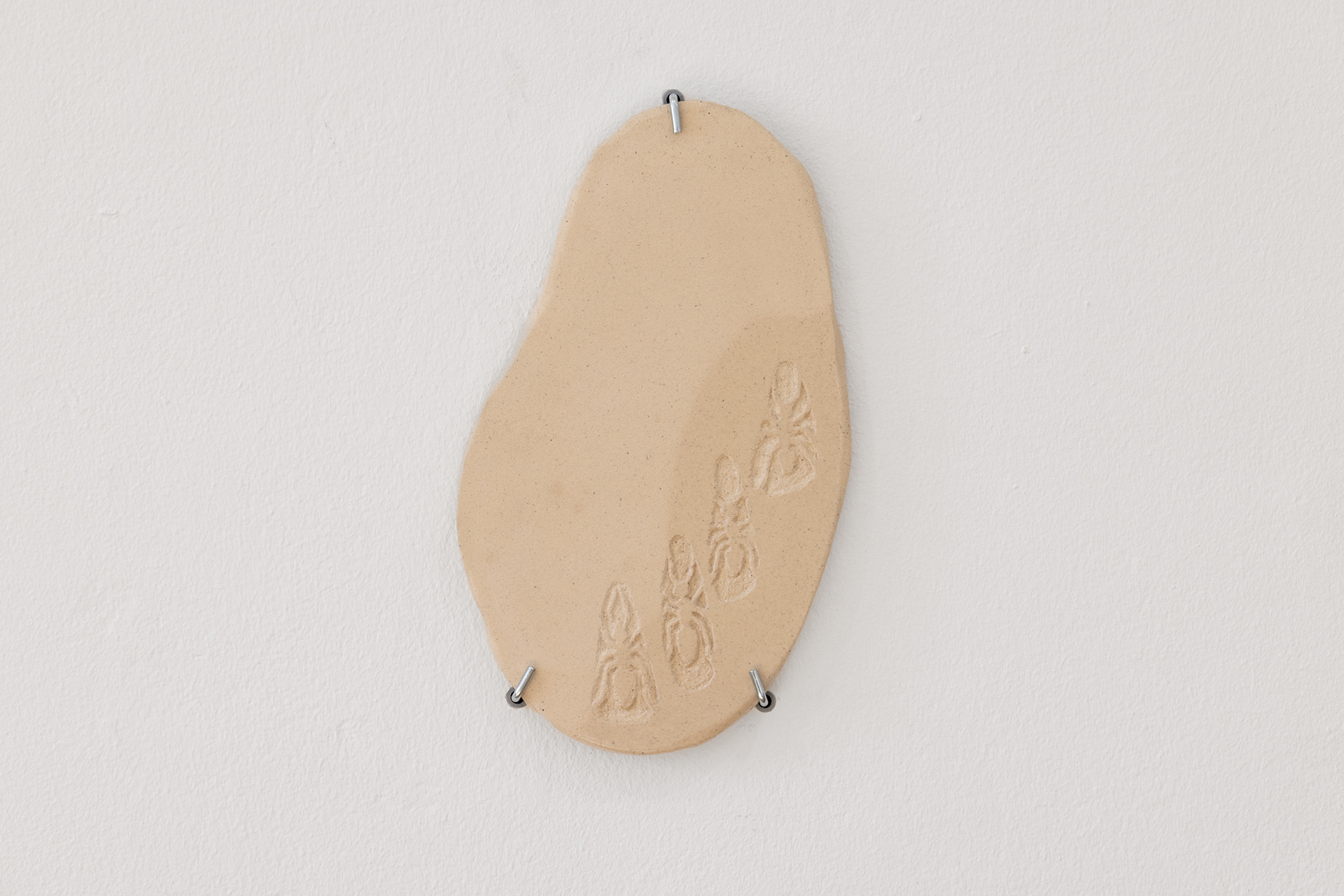
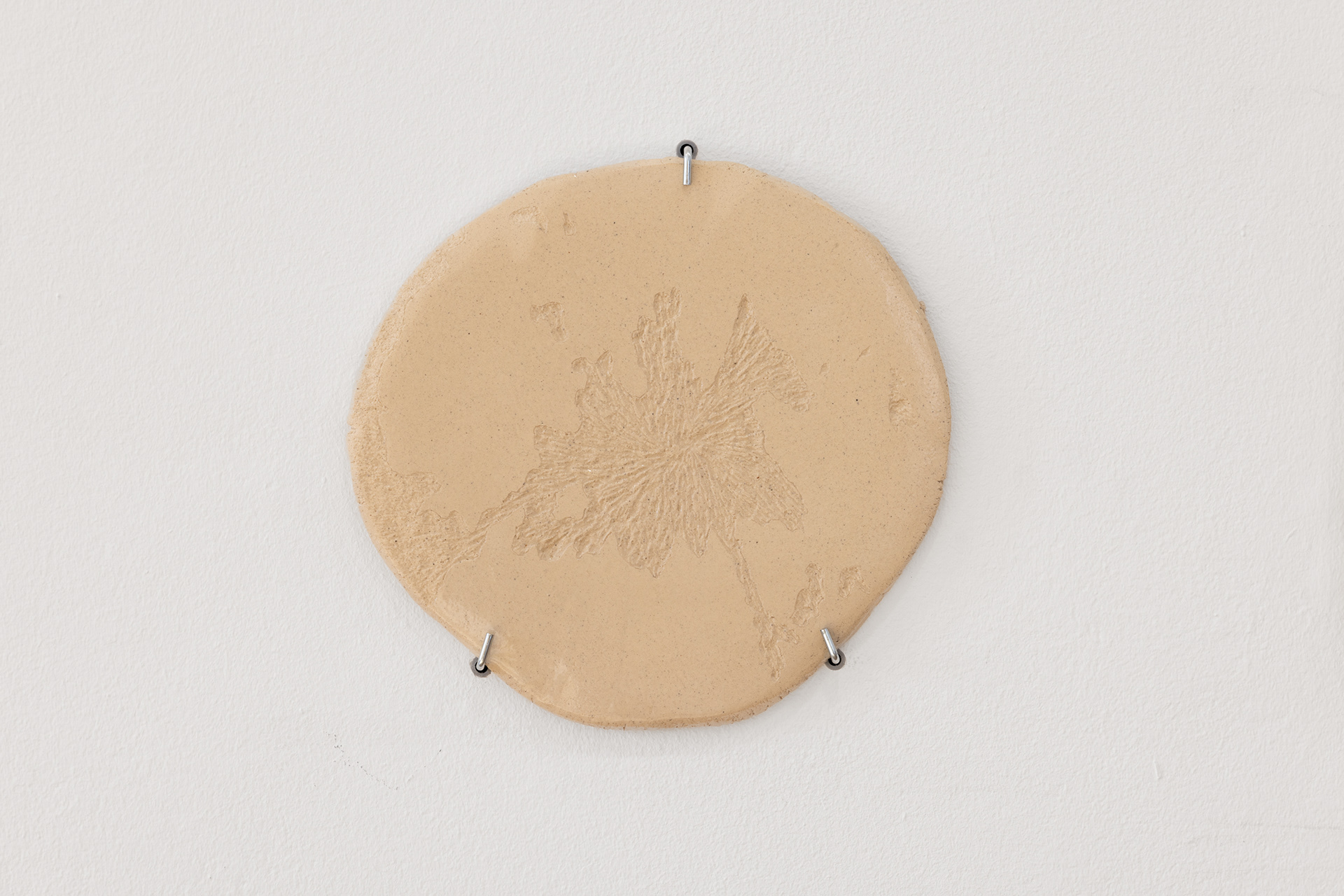
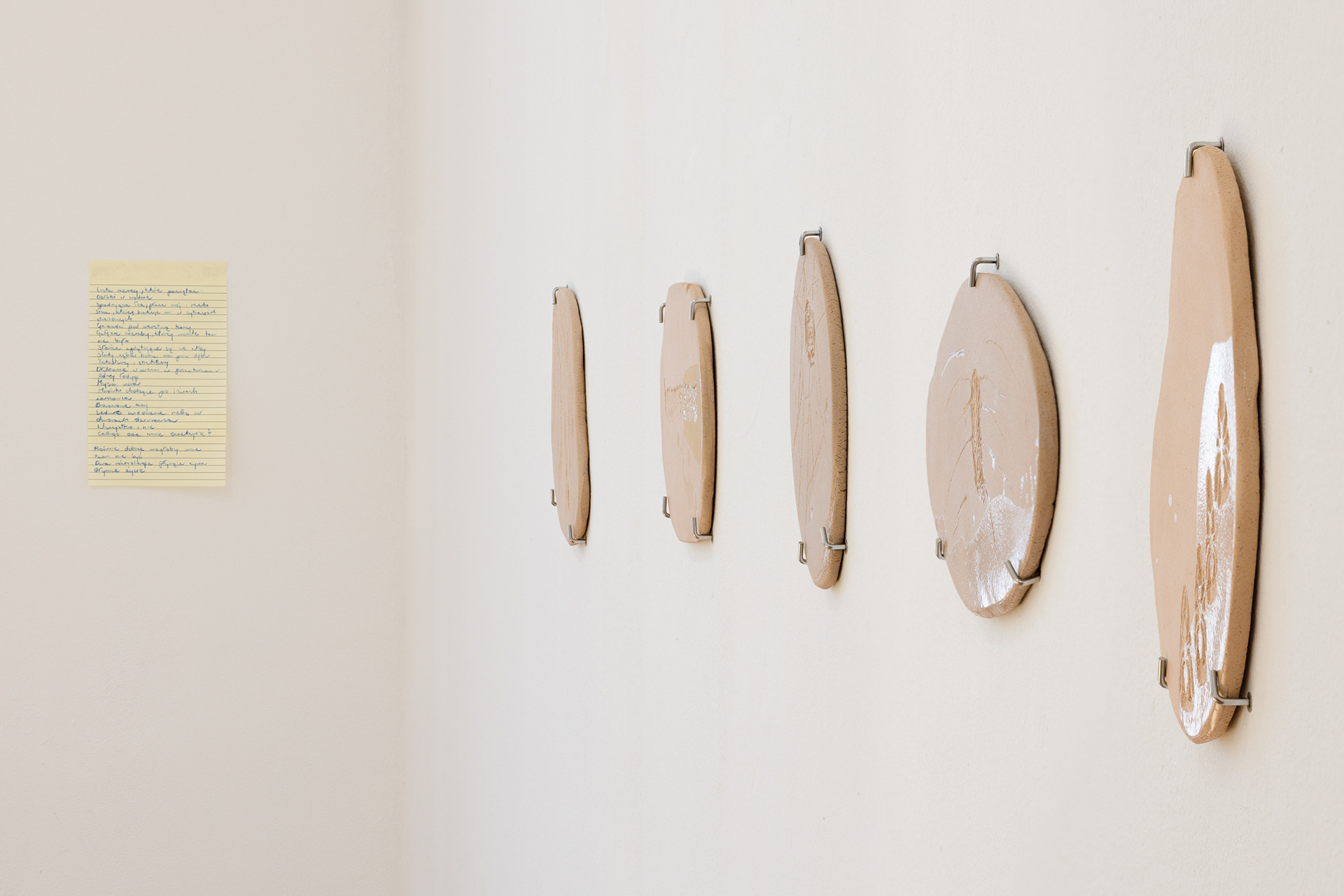
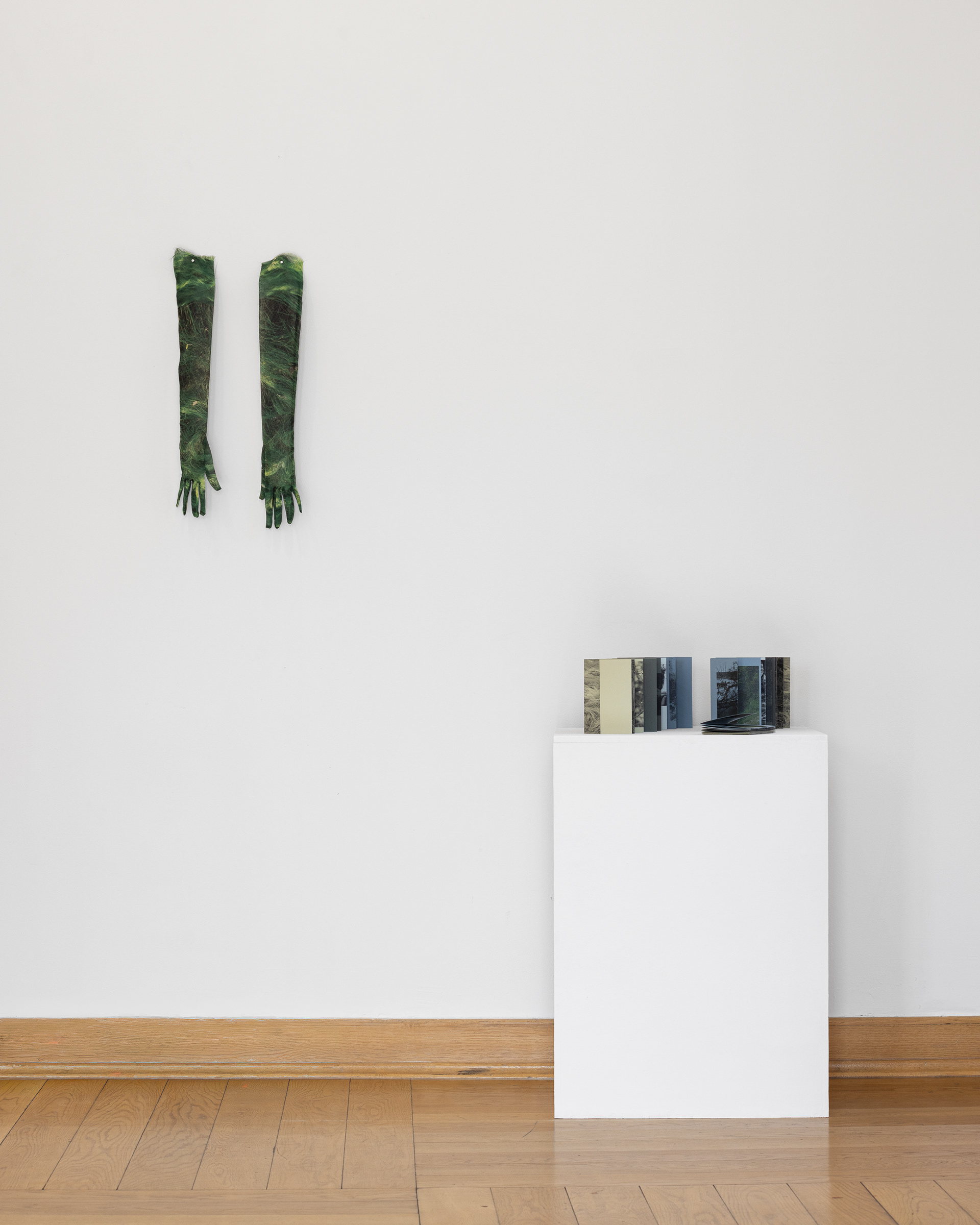
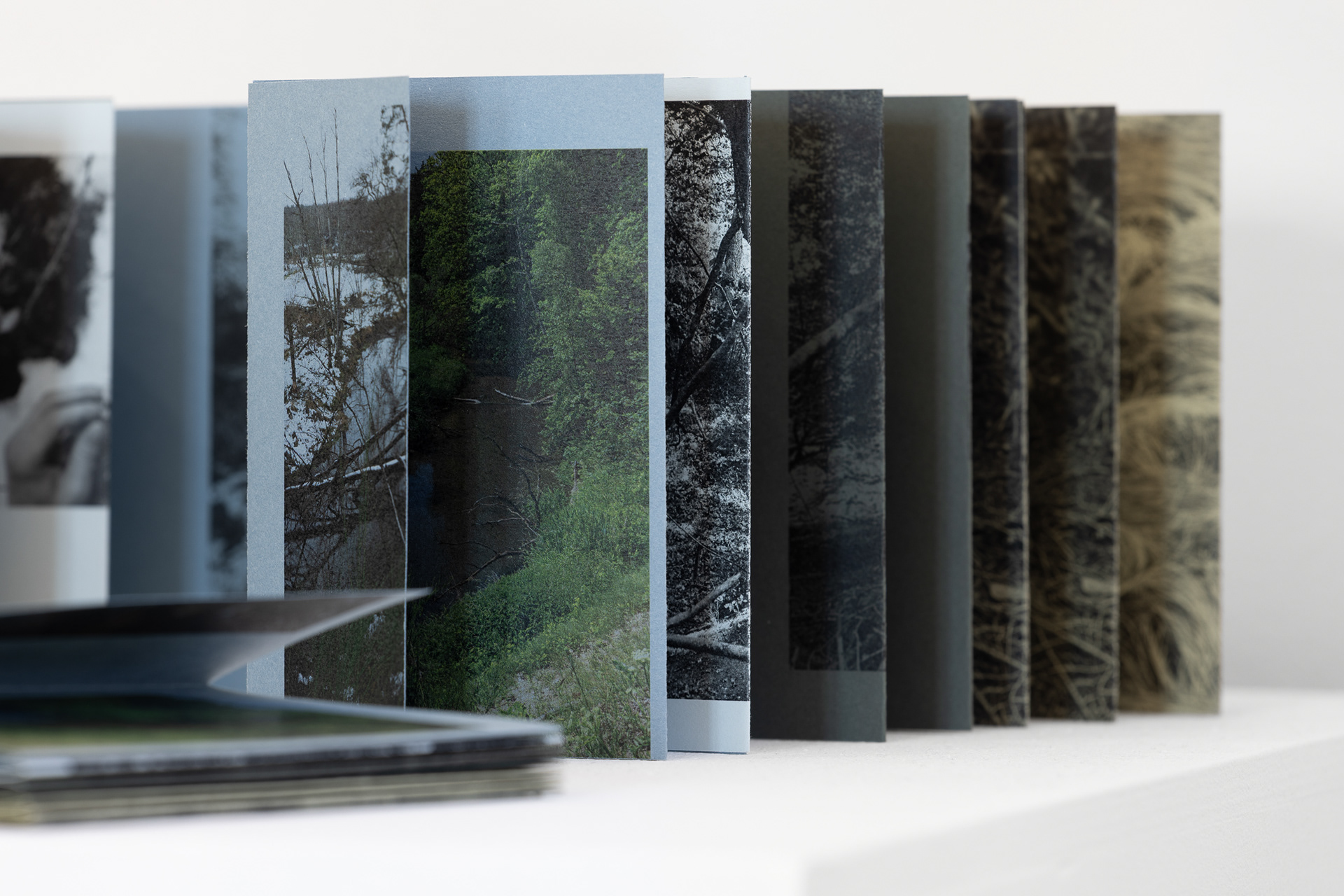
The works in the Topography of Soft Ground can be thought of as prostheses of memory. They allow memories to live on by themselves, without human presence. The work Archive of Colour: Parsęta documents the plants growing by the river through their colouring properties. The same palette can be found in the central work, River Bank/Course that meanders like a river through the gallery space. The ceramic reliefs from the Things I Remember series are another non-verbal way of telling the river story. All these representations escape realism and emphasise physical experiences. The gloves in Immersing Your Hands into the Landscape are a portal to memory, and a mediating tool, a substitute for the real, soothing experience we long for. A similar interplay of distance and physicality can be found in the Spitting into the Water / Tear, in which a tear (or is it saliva?) dripping into water has frozen in an almost erotic tension.
People only appear in the second part of the exhibition. In a smaller room of the gallery, you will hear stories – the stories of the former and current residents of the village of Krosino. All the stories are linked by a sense of the place’s uniqueness. It was by the Parsęta that lemon-scented sorrel grew; its banks concealed secrets; you could find shelter there; there were stories of friendship and love; everyday life became magical there.
The reference to topography in the title is an allusion to attempts at capturing, defining and framing, and yet the adjacent soft ground points to elusiveness. It refers to the subjectivity of documentation methods, but also to the history of the wetlands around the Parsęta. Or maybe, the exhibition isn’t about the River Parsęta at all? Perhaps anyone can substitute a different name for that river? The name of a place that is a safe haven for them, a soothing memory that brings a smile, inner warmth, and perhaps even a sense of emotion.
* Excerpt from Gabriela Piwar’s notes
fot. Zuzanna Wudarska